7. Your are an Activtiy!
In the previous posts concerning mental maps, I talked about a way of thinking about the world that is radically different from our normal way of doing so (though it is well-known to scientists and philosophers). I will now introduce a second example of this.
In my post 'Universal Awareness: A Summary of the Theory', I explained that the theory represents a human being in terms of three parts. Let's just consider two of these, namely 'Host' (your physical body, notably your brain and nervous system) and 'Person' (the individual you are, usually identified by a name).
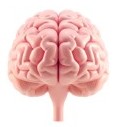
Whilst we would consider any Host to be an object or entity, the theory argues that what is meant here by Person is an activity, something a Host does. This means any physical activity - walking, talking, eating, breathing, sleeping, etc. - but more significantly, activity of the brain - seeing, hearing, thinking, feeling, imagining, remembering, etc. Often, we speak about these activities as if they are entities - 'perceptions', 'sensations', 'thoughts', 'feelings', 'images', 'memories', etc. - but they are always activities. This even applies to 'the mind'. Your mind is not a thing; it is what your brain does!
So, putting it simply, anyone whom we identify as 'a person', including yourself, is not a physical entity but an activity, what that person's body and brain are doing.
So, putting it simply, anyone whom we identify as 'a person', including yourself, is not a physical entity but an activity, what that person's body and brain are doing.
Now, consistent with the theme of previous posts, we may need to be reminded that the above can only be a way in which we represent the world. We cannot say that this is the way the world is in reality, and indeed it may seem a very unusual way of representing matters. I believe, however, it is more correct (a more accurate map) than our everyday way. But I would still advise that how we normally think and speak about these things is much more adaptive and useful in our everyday lives. No need to apply this different way of thinking in that context!
One consequence of the above reasoning is that when a person dies, that is the end of him or her. At death, the Host is no longer able to engage in the activity of being the Person in question. So, there is no existing in another place, such as heaven or hell or the spirit world.
But what can we say of the third component that I have identified, namely the Soul? Recall that, in terms of the theory, this is your awareness of self, i.e. awareness of being (and 'doing') the person you are. Now, the theory has much to say about this question, but for the time being it appears that at death, the fate of the Soul is the same as that of the Person. The Host can no longer engage in the activity of being aware of itself and its activity of being that Person. And so the Soul 'dies' too.
In anticipation of future posts: What might be the consequences of all for the time-honoured question 'Am I the same person over time?'
Note: At present, it's not possible for you to post your comments on my blog directly. But I welcome them via my email address, and I'll only upload them under 'Comments' if that is your wish (and with the usual stipulations about offensiveness, etc.)